
Market & Competition
Last-mile delivery is still
growing & consolidation
has begun
ONE MOTO Europe sits inside the intersection of last-mile delivery growth, electric fleet adoption, urban emissions pressure and operator preference for flexible vehicle access over ownership.
Dimension, Apr 2026
$45.9bn
Estimated Europe last-mile delivery market value in 2026, with $87.8bn forecast by 2035 at 7.5% CAGR.
Grand View Horizon
$87.5bn
Projected Europe last-mile delivery revenue by 2033, from $40.7bn in 2025 at 10.2% CAGR.
Expert Research
$100.1bn
Projected Europe e-bike market by 2034, from $25.63bn in 2024 at 14.6% CAGR.

Why Bulgaria & Eastern Europe
Lower operating cost, proven JV base & named platform demand
Bulgaria offers a low-cost base, an established ONE MOTO Europe joint venture already trading, and proximity to the Central and Eastern European delivery market where Glovo and Wolt operate at scale.
Defensibility
A complete mobility ecosystem,
not just vehicle supply
The European last mile market is large, expanding, and under pressure to decarbonise. ONE MOTO Europe enters as a specialist lessor rather than a generic manufacturer or finance company.
OUR COMPETITION
Raise then build – VC too soon
Sell units once. ONE MOTO Europe captures recurring monthly revenue and takes capital risk away from operators.
Vehicle manufacturers
Sell units once. ONE MOTO Europe captures recurring monthly revenue and takes capital risk away from operators.
Generic leasing firms
Finance any vehicle. ONE MOTO Europe is built around last-mile EVs, servicing, telemetry and delivery economics.
EV fleet entrants
Often start without contracts. ONE MOTO Europe has a signed 1,000 unit order and 6,000 vehicle Heads of Terms.
THE ONE MOTO DIFFERENCE
ONE MOTO advantage
We committed to the future before we launched. We focused on building the ecosystem for longevity. From the vehicle development, supply chains and how to effectively manage scale and mitigate exposure.
Many others have raised tremendous VC capital, burned and raised again, unfortunately many have failed, and not returned to the investors.
We decided to build and then raise – we had a primary option to sell vehicles, now with our progress and business evolution we are able to move towards leasing and opening up the additional revenue streams.
ONE MOTO are a self-funded brand with in-house investment into R&D, group infrastructure, operating data and authorised workshop/battery hub strategy.
We built the foundations, now we scale.
THE PROBLEM
- Last mile delivery operators need vehicles to fulfil contracts, but tying up capital in ownership is inefficient and inflexible for businesses whose volumes swing with demand.
- Combustion vehicles are costly to run, prone to downtime, and increasingly locked out of city centres. Over 300 European cities now run Low Emission Zones restricting older combustion vehicles, and the rules are tightening further in 2026, including new bans on Euro 2 petrol and Euro 5 diesel vehicles in Brussels from January 2026, expanding Zona a Bajas Emisiones coverage across Spanish cities of over 50,000 people, and a move to electric-only Class 3 zones in Stockholm.
- EV ownership solves the emissions problem but creates a capital problem. High upfront cost and residual value risk put fleet electrification out of reach for smaller and mid-sized delivery operators.
- This is the gap ONE MOTO Europe sits inside: leasing removes the capital burden while giving operators compliant, modern vehicles on a predictable monthly cost.
- There is also a compliance driver behind the demand. Under the EU’s Corporate Sustainability Reporting Directive (CSRD), large and listed companies operating in the EU must report audited environmental, social and governance data, including emissions and climate transition plans, with mandatory external assurance of what they report (Salesforce, PwC). For delivery platforms and their retail customers, fleet electrification is becoming a reporting obligation, not a nice-to-have.
THE SOLUTION
- ONE MOTO Europe leases electric delivery vehicles to operators on fixed, all-in monthly terms, so the customer gets a compliant, modern EV without the capital outlay or the resale risk.
- Leasing suits this customer base because delivery businesses scale up and down with demand and would rather pay a predictable monthly cost than carry a depreciating asset on the balance sheet. It is the same logic a small business owner applies when they lease a van instead of buying one outright, they want the vehicle working for them, not sitting as a liability.
- The lease includes the vehicle, maintenance and support, so operators avoid unplanned downtime and repair bills.
- Electric, because city access rules and operator running costs are moving that way regardless of what any individual company decides. Last mile, because two-wheelers and light commercial EVs are the vehicle types best suited to short urban routes, frequent stops and tight margins. Now, because the contracts, the vehicles and the operating history already exist. This is not a plan to build a model, it is a model already running.
| Ecosystem layer | Role in Defensibility |
|---|---|
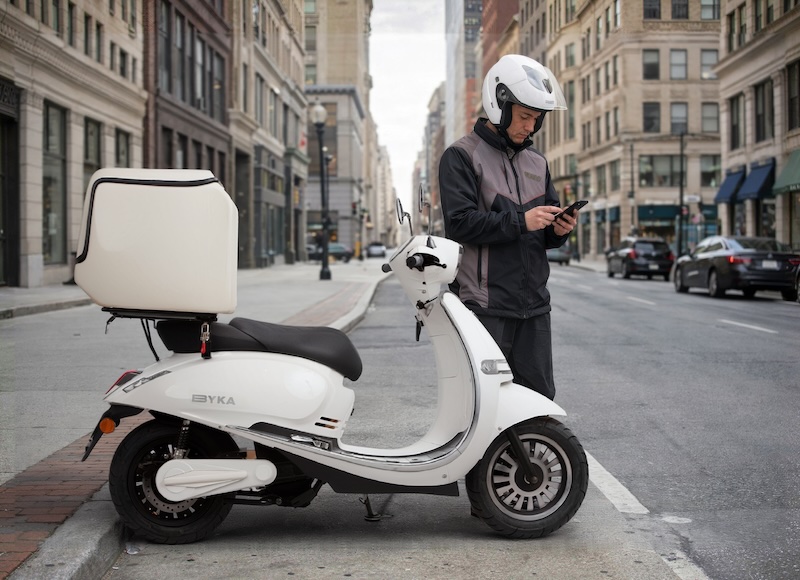
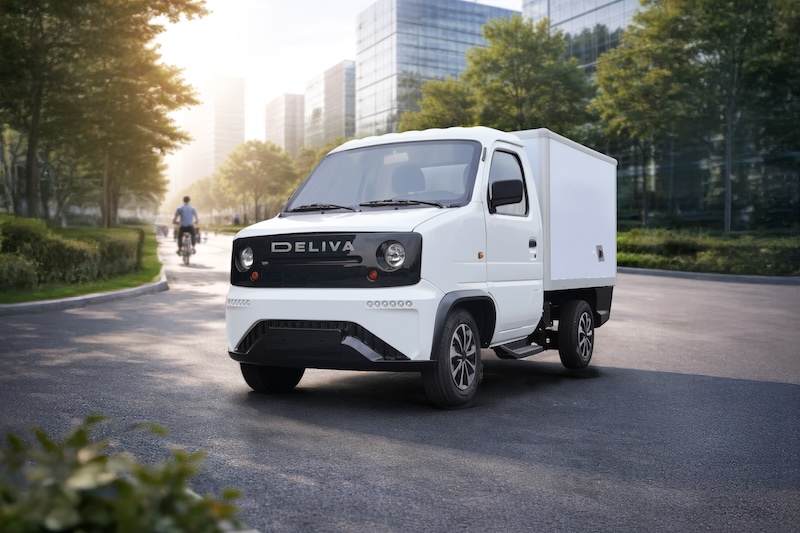
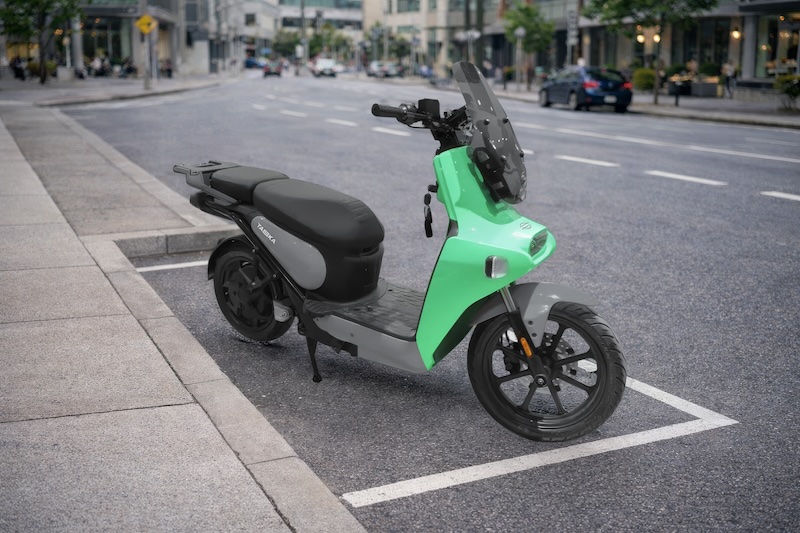
| ONE Fleet | Commercial delivery EVs across two-wheel, three-wheel and four-wheel forms. |
| ONE App | Telemetry, utilisation and fleet visibility for operators and finance partners. |
| ONE Charge | Battery operations and uptime support for high-frequency delivery use. |
| ONE Care | Servicing, rider support, training and operational continuity. |
| ONE Build | Regional assembly and deployment structure across Eastern Europe. |
Vehicle manufacturers
Many sell vehicles once. ONE MOTO Europe leases them and captures recurring monthly revenue.
Generic leasing firms
Finance any vehicles. ONE MOTO Europe is built specifically around EV last-mile delivery.
Other EV fleet players
Mostly build from a standing start. ONE MOTO Europe has a trading JV, signed order and 6,000 HOT.
Central And Eastern Europe Courier, Express, And Parcel (CEP) Market Size and Share
Last Mile Delivery Market Charting Growth Trajectories 2026-2034: Strategic Insights and Forecasts
CITED Sources
The last mile delivery market size has grown strongly in recent years. It will grow from $184.2 billion in 2025 to $199.68 billion in 2026 at a compound annual growth rate (CAGR) of 8.4%. The growth in the historic period can be attributed to growth of e-commerce platforms, rising consumer demand for fast deliveries, expansion of urban distribution networks, increasing use of mobile tracking solutions, growth of third-party logistics providers.
The last mile delivery market size is expected to see strong growth in the next few years. It will grow to $277.76 billion in 2030 at a compound annual growth rate (CAGR) of 8.6%. The growth in the forecast period can be attributed to expansion of same-day and instant delivery services, rising investments in autonomous delivery technologies, growing adoption of electric last mile vehicles, increasing demand for sustainable delivery solutions, integration of ai-driven logistics platforms. Major trends in the forecast period include increasing deployment of autonomous delivery vehicles, rising adoption of real-time route optimisation systems, growing use of micro-fulfillment centres, expansion of electric delivery fleets, enhanced focus on customer-centric delivery models. READ MORE
Emerging Trends in Last Mile Delivery Market
The Last Mile Delivery market is in a constant state of flux, being actively reshaped by innovative and forward-thinking trends:
Crowdsourced and Gig Economy Delivery: The continued and expanding utilisation of independent contractors and flexible gig economy platforms offers unparalleled scalability, agility, and cost-effectiveness for delivery services, particularly during peak demand periods.
Autonomous Delivery Solutions: Significant investment and pilot testing of autonomous vehicles (AVs) and delivery drones are gaining considerable momentum, promising substantial future gains in efficiency, speed, and cost reduction for package delivery.
Sustainable Delivery Options: A pronounced and accelerating shift towards environmentally conscious delivery methods, including the widespread adoption of electric vehicles (EVs), e-bikes, cargo bikes, and the implementation of optimized routing algorithms to minimize carbon footprints, is a defining trend.
Hyperlocal and Micro-Fulfilment Centres: The strategic establishment of smaller, decentralised fulfilment centres located within urban proximity is enabling significantly faster delivery times, reducing overall transit distances, and enhancing responsiveness to local demand.

Challenges and Restraints in Last Mile Delivery Market
Despite its strong growth trajectory, the Last Mile Delivery market faces considerable challenges:
- High Operational Costs: The “last mile” is inherently the most expensive leg of the delivery journey due to factors like traffic, multiple stops, and failed deliveries.
- Urban Congestion and Infrastructure Limitations: Traffic jams, parking restrictions, and limited infrastructure in densely populated areas significantly hamper delivery efficiency.
- Environmental Concerns and Regulations: Increasing pressure to reduce carbon emissions and comply with stringent urban delivery regulations necessitates investment in greener logistics.
- Labor Shortages and Driver Management: Attracting and retaining qualified delivery personnel, along with managing a distributed workforce, remains a persistent challenge.
- Rising Customer Expectations for Speed and Convenience: Continuously meeting ever-increasing demands for faster and more personalised deliveries adds significant operational pressure.
Driving Forces: What’s Propelling the Last Mile Delivery Market
Several interconnected forces are acting as powerful catalysts for the robust and sustained growth of the Last Mile Delivery market:
- Booming E-commerce Penetration: The exponential and ongoing growth of online retail, propelled by evolving consumer shopping habits, increased internet access globally, and the convenience it offers, stands as the primary and most significant driver.
- Heightened Consumer Expectations: Modern consumers increasingly demand faster, more flexible, and highly transparent delivery options, including the widespread adoption of same-day, same-hour, and precise time-slot deliveries, setting a new benchmark for service.
- Technological Advancements: Continuous innovations in route optimisation software, AI-powered analytics for demand forecasting and efficiency, real-time tracking systems, and the increasing integration of automation are significantly improving operational efficiency, reducing delivery costs, and enhancing the overall customer experience.
- Urbanisation and Dense Population Centres: The accelerating concentration of populations in urban areas creates both a concentrated demand for goods and complex logistical challenges that specialised last-mile solutions are uniquely positioned to address, making these areas critical markets.
- Growth of On-Demand Services: The proliferation of on-demand platforms for a vast array of services, including food delivery, grocery shopping, and retail goods, directly fuels the need for rapid and efficient last-mile delivery capabilities, creating a symbiotic relationship.
Sources
External references
Dimension Market Research
Grand View Research Europe outlook
ResearchAndMarkets / Expert Market Research,
Mordor Intelligence
Research and Markets